s a tOWER'S lATEST rELEASE - BEHIND enemy lines : An In-depth Insider's guide to spiritual warfare

Groundhog Day: Let a Sleeping Hog Lie
1/31/20264 min read

Where Legends Wake
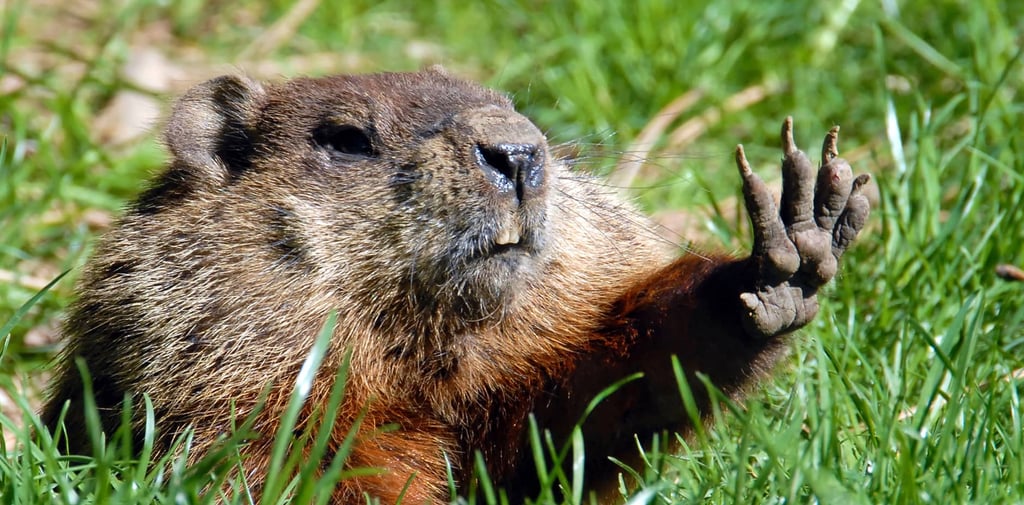
It’s amazing that so many people would rise early on an icy cold winter day and head out to the Pennsylvanian hills to watch a groundhog emerge from its burrow. Really? I’d rather snuggle into my warm, cozy bed. Besides, good ole Phil (the groundhog) only has a 40% accuracy rate with his weather predictions, and nobody really takes him seriously, do they? Well, no one that I know of, but that doesn’t stop the nostalgic mob from gathering in Punxsutawney to take part in an old folk tradition called Groundhog Day. The master of ceremonies, of course, is... Groundhog Phil (aka Seer of Seers, Sage of Sages, Prognosticator of Prognosticators, and Weather Prophet). Wow! Quite an impressive resume for a groundhog. The debated question that causes alarm and follows our footsteps up to Gobbler’s Knob is the groundhog annual weather event: simply prediction or divination?
Prediction or Divination
Let’s take a look. Prediction refers to a statement or forecast about what will happen in the future, often based on logical analysis, data, or scientific reasoning. People commonly use it in fields like meteorology, economics, or politics. Divination, on the other hand, is the practice of seeking insight into the future or hidden knowledge through supernatural, mystical, or spiritual means—such as tarot cards, astrology, or interpreting omens. While both aim to anticipate future events, divination emphasizes spiritual or mystical methods, whereas prediction relies on observable, analytical, or empirical approaches. Burr, what I really want is to pull my covers over my head and burrow down in my blankets and wonder... is this how the groundhog feels before he’s forced to face the cold? So, let’s burrow down deep into that “groundhog” hole.
The German Connection
Once upon a time, before the age of technology, people actually took seriously that which we now take for granted. During the long, cold, and dark winter, one needed to evaluate their supplies to make sure they had enough to sustain their families until Spring. People of that day were more of an agricultural people than we are today, so they paid more attention to the seasons. After all, their lives depended on it. Germans, in particular, developed a belief within European folklore that observed badgers or hedgehogs leaving their burrows on this day to foretell the arrival of spring and predict winter’s duration. You see, the little guys go into hibernation in the late fall, but in February, male groundhogs emerge from their burrows to look for a warm mate (not really to predict the coming warm weather) before going underground again until hibernation ends in March.
Hog Hunting
What? That’s right, the groundhog is not practicing divination or prediction. He’s behaving on his God-given instinct upon awakening from hibernation. Although animals may be attuned to nature and sense changes in humidity and air pressure, which may prompt him from hibernation, finding a female groundhog motivates him. So, now, can we just let the sleeping groundhog lie?
Candlemas-True Light
Over time, Groundhog Day became connected with another holiday or the other holiday got connected with Groundhogs Day, depending how you see it. The European Christian Catholics celebrated Candlemas to commemorate the presentation of Jesus in the temple, forty days after Christmas. They deeply tie it to the symbolism of light, as they blessed and lit candles. These candles represented Jesus, the light of the world, who came to dispel sin and darkness. Groundhog Day became directly linked to Candlemas through ancient European weather lore, as they believed that the weather on Candlemas could predict the rest of winter by observing badgers to see if they cast shadows. The shadow seen by the groundhog mirrors the light and darkness themes central to Candlemas—symbolizing both the physical world and the spiritual journey from darkness to light. While I can see the connection between the shadow mirroring light from darkness, how it relates to weather beats me.
Imbolc- Artificial Light
Another holiday celebrated during the same time of year is Imbolc, the Celtic pagan fire festival that welcomes Spring. It commemorates the changing of the goddess from crone to maiden. Traditionally, female witches wore crowns of lit candles. It is also a day for initiations (so tuck that away in your prayer closet). The animal associated with Imbolc is the ewe, as that is when the ewes come into milk for the coming spring lambs. This pagan holiday has three things in common with the Christian holiday: candles, light, and, you got it, Groundhog Day. Most likely because of timing, though the actual date of Imbolc may differ as it does not always align with the Gregorian calendar.
Ceasing Groundhog Day
As for weather divination, that associates with the goddess Cailleach, not the groundhog. Ironically, the Catholic Church holds its feast day for St. Brigid on February 1st (Candlemas) often associated with Celtic traditions honoring the goddess Brigid, who is often associated with Imbolc. Neither of which had anything to do with a groundhog. Here, it appears man, in his observing animal patterns, discovered the groundhog’s brief winter jaunt marking the observance of Candlemas, or Imbolc. Thus, both traditions absorbed Groundhog Day into their customs.
The Shadow Showdown
As in every holiday, it comes down to determining the origin. If trucking up the hill to Gobbler’s Knob is something that interests you, pray about it before you make the climb. As for me, I’m burrowing in my nice warm bed, praying for an early spring.
Have a Happy and Warm Groundhogs Day!
©By S.A. Tower, 2026