s a tOWER'S lATEST rELEASE - BEHIND enemy lines : An In-depth Insider's guide to spiritual warfare

Unmasking Evil Holidays
S. A. Tower
4/25/20263 min read
The Night of Witches
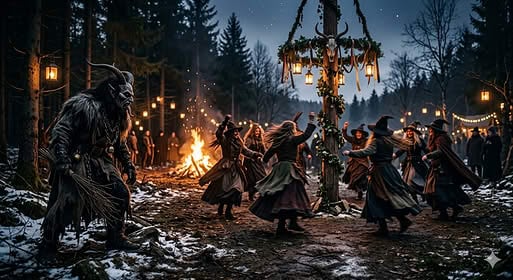
Hexennacht, or “the night of witches,” which occurs on April 30th and originally began at Mount Brocken, the highest point of the Hart Mountain range in Germany. Here, witches gathered to call upon spirits to aid in the land’s fertility. They engaged in sacred intoxication, ecstatic rituals, and dancing in wild abandon to bring in the spring. This festival caters to the wilder side of sinful nature. Beyond witches, Luciferian traditions also celebrate it, viewing this night as a celebration of the “Black Flame,” fertility, and forbidden knowledge. The Satanic Temple now includes it as one of its holidays, considering it a day of remembrance for those harmed by superstition and the persecution of witches.
Heralding in the Spring
Hexennacht coincides with another pagan celebration, called Walpurgisnacht. Both celebrations traditionally occur on April 30th, the night before the Gaelic Beltane, which falls on May 1st. Though there is a stark contrast between the light-hearted springtime rites of Beltane where flowered wreaths adorn the heads of maidens dancing beneath the maypole verses Witches unbridled dancing and casting spells to drive away spirits of the dark half of the year, both take part in fertility rituals and hand-fastings (which is a temporary year and a day pagan marriage) as part of their heralding in the spring.
Isn't It Ironic?
These three distinct festivals are often combined, likely because of their timing on our calendar. Strangely enough... Walpurgisnacht, however, is unique in its association with Saint Walpurga, an English nun who became a missionary and traveled to Germany to help Christianize the Germanic tribes and Saxons. Her mission focused on converting the local populace from heathenism to Christianity. She battled “pest, rabies and whooping cough,” and her success in ending pagan sorcery in that day also celebrated her. How ironic that a nun who fought against witchcraft would somehow become intertwined with the pagan celebrations of seasonality and fertility.
Lesser of the Three Evils?
Whichever of the three names you call it, the festival currently becoming mainstream caters towards the darker practices. Not that the light-hearted or the lesser of the three evils are any less of an abomination to God. It portrays the cultural shift and the de-sensitivity towards evil in our society and the rise in popularity for darker traditions. While public events will take on the appearance of a darker Halloween event, witches will gather for their “last hurrah” with darkness before welcoming in spring.
Spring Halloween
In addition, Walpurgisnacht frequently earns the moniker “Spring or second Halloween” as it signifies the transition from winter to spring, paralleling Halloween’s role in marking the shift to winter. Basically, both are marking points for the dark half of the year. They both occur when the “veil” between our world and the spirit realm is said to be thinnest. A time of spirits crossing over and a heightened awareness for divination.
So, you are probably thinking, “Ms. Tower, what are we to pray for in this tangled mess of occult celebrations, and what are we to expect in the end of days?”
Saint Nick's Evil Twin
In recent years, we have witnessed another dark figure known as Krampus, the half-goat, half-demon figure originating in Alpine traditions, the personification of the devil who punished misbehaving children at Christmas now infiltrating Halloween parades and events, not only in Europe, but right here in the United States. The ever-growing debate over whether Krampus belongs to Christmas because of his being the dark counterpart to St. Nick, or Halloween considering his demonic appearance and dark folklore.
Yet, he is also becoming a visible part of Walpurgisnacht festivals, not surprising considering the growing interest in his part in Halloween. What we see simply is evil blatantly parading in our streets and the extension of its presence beyond their historical boundaries. The spiritual shift that has taken place is evident in the dark fascination and acceptance of such events.
Beacon of Hope
The increase in darkness across the nations of the world comes as no surprise. As the end-times draw near, we know the signs of the times to watch for. There is no cause to fear the power of the witch, nor the powers that they invoke. Our God is all-powerful and His name is greater than any name they could udder. We do not need to fear darkness when the greatest light is within us. Rather, as Christians, we look with discerning eyes that see within the spiritual realm. What occurred to me was Saint Walpurga’s legend of stopping pagan sorcery, much of which has now resurfaced. However, her example is a beacon of hope in a world where darkness fights to reign. She went to a land steeped in darkness and converted the people to Christianity. So too, we can bring the light of Christ back into our darkened world.
A Call to Arms
And so… the call to prayer. The information provided above gives you insight so that you can pray accordingly. Pray as the Lord leads. As long as we are still here on this planet, we can pull down strongholds and push back the darkness. Go forth in the authority Jesus has given you, “to trample on snakes and scorpions and to overcome all the power of the enemy; nothing will harm you,” Luke 10:19.
(c) By S. A. Tower, 2026